 Telehealth
 Blog
Blog
 reception@insideouttherapy.com.au
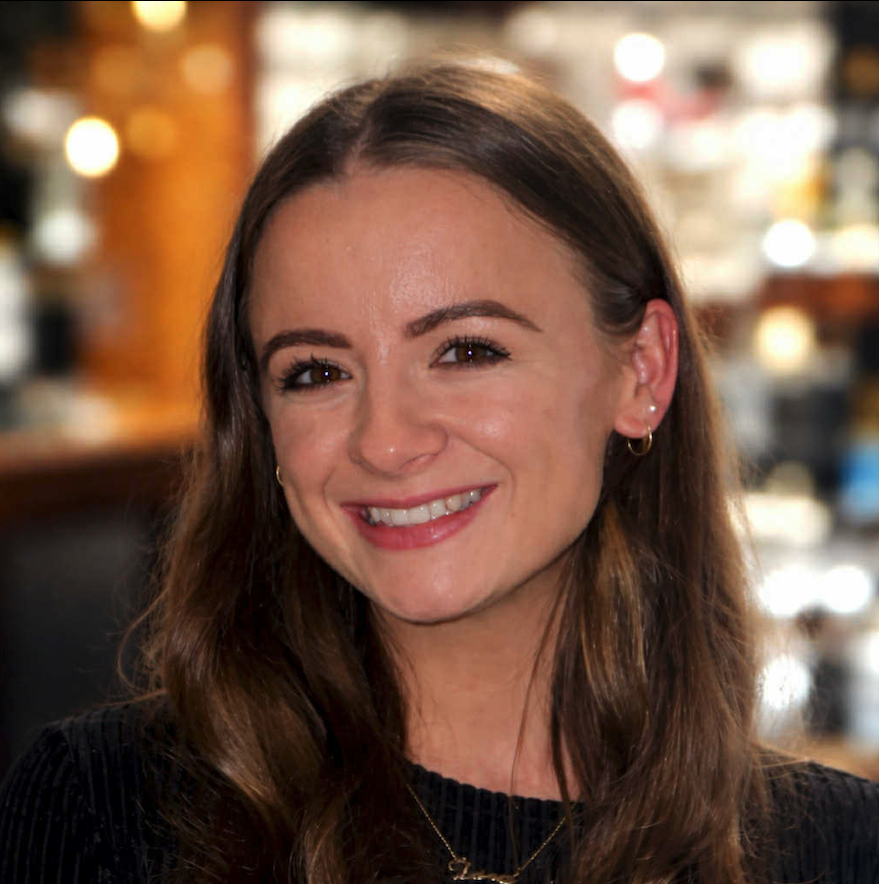
Last week, Inside Out Occupational Therapist Dara McAleer delivered a whole-of-school presentation to staff at St Marks Anglican School, exploring how occupational therapy can support students in the classroom.
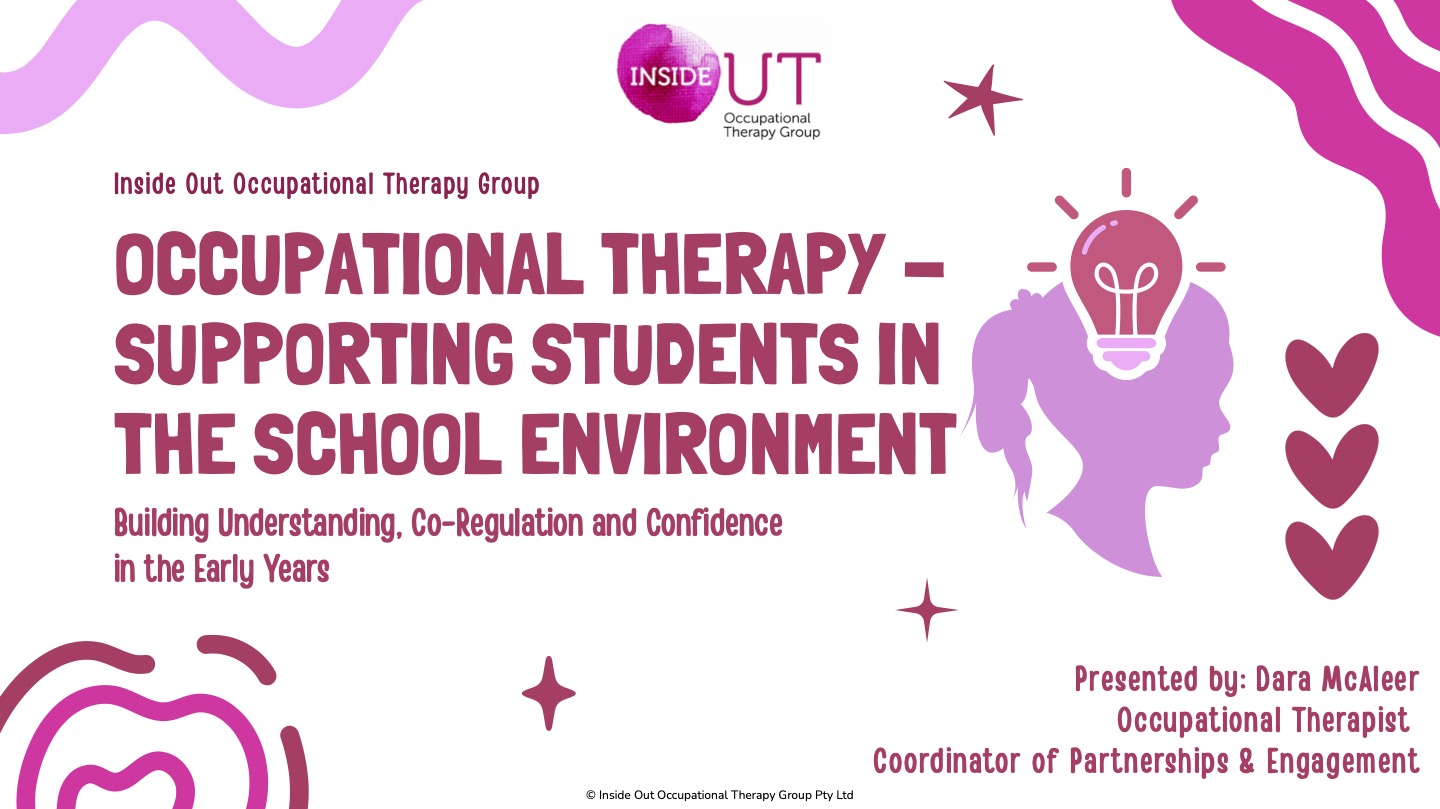
Titled “Occupational Therapy, Supporting Students in the School Environment: Building Understanding, Co-Regulation and Confidence in the Early Years,” the session unpacked the foundations of self-regulation, sensory processing and the central nervous system, and how a deeper understanding of these areas helps teachers respond to the children in their classrooms.
Dara, who is Inside Out’s Coordinator of Partnerships & Engagement, regularly works alongside school teams to translate occupational therapy thinking into everyday classroom practice. The St Marks session focused on building staff confidence to notice early signs of dysregulation in young students and to use evidence-informed strategies to support engagement and learning.
What is occupational therapy?
Occupational therapy is often misunderstood in school settings, where teachers see the “tip of the iceberg” behaviours but not the underlying nervous-system factors driving them. Dara opens her staff sessions with the widely cited definition by Williams and Shellenberger:
“Occupational therapists use a knowledge base of neurology, anatomy, physiology, kinesiology, child development, psychology, psychosocial development, activity-task analysis, and therapeutic techniques. They are trained to treat clients holistically, addressing their cognitive, emotional, and physical needs through functional, activity-based treatment.”
Williams & Shellenberger, 1992
In a school setting, this translates into supporting students’ sensory processing, self-regulation, motor skills, social participation and capacity to access the curriculum, all the foundations that sit beneath the behaviour we can see.
Top-down vs bottom-up regulation
One of the key concepts Dara explored with St Marks staff is the difference between “top-down” and “bottom-up” strategies for helping students stay focused and engaged. Both are useful, but they work in very different ways, and the most effective classroom support usually starts with the body before the mind.
Top-down (cortical)
The student uses thinking strategies, self-talk, reminders, planning, to stay on task. “Paying attention” in this way takes effort, and a child usually pays for it: it’s hard to sustain if their level of arousal isn’t already matched to the task in front of them.
Bottom-up (cerebellar)
The student’s body does the work first, heavy work, movement, deep pressure, rhythm, which modulates arousal and, in turn, promotes focus and attention. Often a child engages in bottom-up regulation subconsciously and intuitively (the wriggling, the fidgeting, the leaning).
When staff understand this distinction, the small things they already see in the classroom, a student leaning on a chair, asking for a movement break, needing rhythm or pressure, start to look less like behaviour problems and more like self-regulation in action.
What sessions like this cover
The St Marks staff session is part of a broader school-based presentation Inside Out offers. Sessions typically include:
- The foundations of the central nervous system, sensory processing and arousal theory, and their impact on self-regulation behaviours.
- Key therapy approaches that interface with teaching environments, Sensory Processing, Models supporting regulation, Neurodevelopmental Theory, Social Thinking curriculums and motor-skill acquisition.
- Practical, classroom-ready strategies staff can use to help students regulate and engage.
Bring this presentation to your school
If you’d like to talk about us presenting to your staff or whole school, get in touch with Dara and the Inside Out team at reception.
Email reception@insideouttherapy.com.au© Inside Out Occupational Therapy Group Pty Ltd. Presentation delivered at St Marks Anglican School, May 2026.